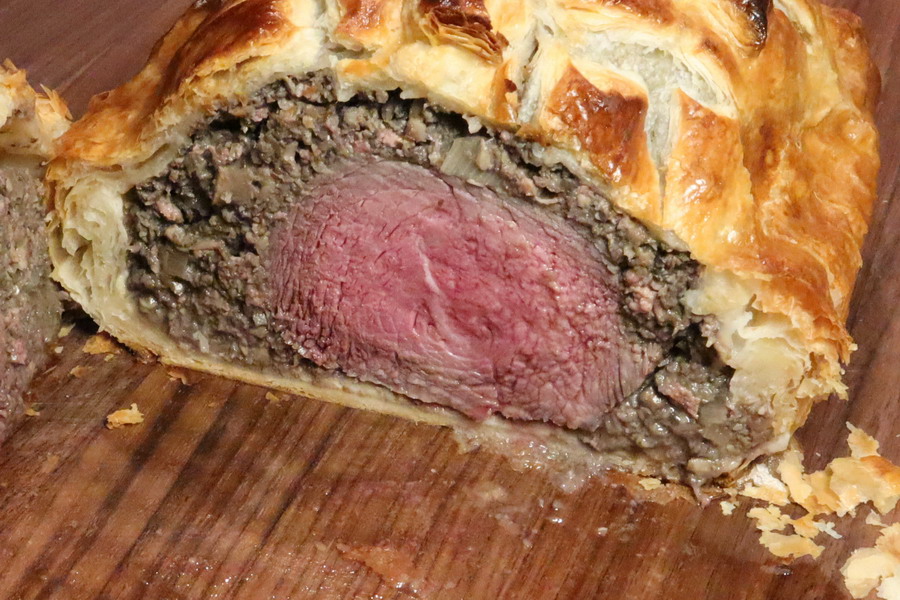
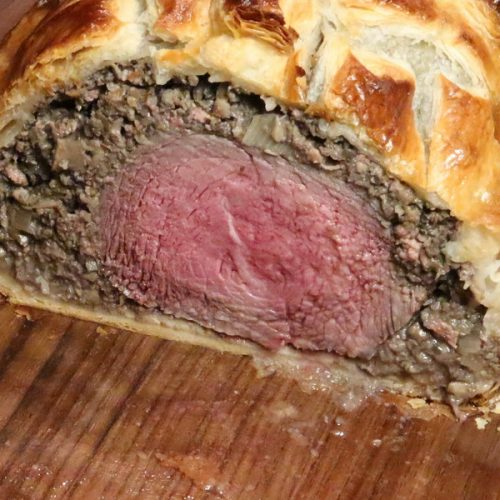
Beef in Pastry (aka Beef Wellington)
This recipe is inspired by Jennifer Patterson, one of the “Two Fat Ladies” of BBC fame. It’s essentially Beef Wellington. If you’re in a hurry, this isn’t the recipe for you. If you want a “restaurant-style” beef in pastry, stick with this one. In order to extract all the flavors of the marinade, ensure the duxelles adheres to the meat, and to make a gravy that’s “to die for,” I make this dish in stages over the course of a couple of days. You can probably shortcut the timing, but it’s well-known that many dishes are better the next day than when first made. If you take the challenge, you’ll make a beef in pastry fit for fine dining.
Ingredients
Step 1 Ingredient
- 4 lbs. Beef Tenderloin center cut measuring about 6″ to 8″ long
Step 2 Ingredients
- 2 ribs Celery diced
- 1 large Onion diced
- 3 Carrots diced
- 2 leaves Bay leaves
- 1 tsp Thyme
- 1 tsp Sage
- 6 Peppercorns
- 4 Cloves
- 6 ounces Dry vermouth
- 2 tbsp Olive oil
- 1/4 cup Brandy
- 1 tsp Salt
Step 4 Ingredients
- 2 Shallots diced
- 2 Packages Fresh Mushrooms well-diced
- 2 tbsp Butter
- 4-6 ounces Pate duck or chicken liver pate
- 4 ounces Port wine
Step 6 Ingredient
- 1 pkg Pie pastry one roll
Step 7 Ingredients
- 1 pkg Puff pastry
- 1 large Egg
- 1 tsp. Water
Step 9 Ingredients
- 3 ounces Port wine
- 1 tbsp Mushroom bouillon (I use Better than Bouillon mushroom base.)
- 2 tbsp Tomato paste
- 2 tbsp Ketchup
- 1/2 cup Heavy cream
- 2 tbsp All-Purpose Flour
Instructions
Step 1: Prepare the Tenderloin
- This is a step left out of many recipes, and if you don't do this, it leads to unsatisfying results. A beef tenderloin, purchased from your local grocery store, typically comes in a plastic vacuum-packed bag. Unless you’re buying directly from a butcher, you’ll need to “clean” the tenderloin.
- First, remove from the bag and let drain. Cut off the sinew. You can remove most of the fat simply by hand. Then, cut off all the silver skin, which is connective tissue you don’t want to retain. Beef scraps can be used to render and make your own beef drippings, so keep them if you’d like to make something else; but we’re done with them in this recipe.
- Now, looking at the tenderloin (if you bought a whole one), think of it in three sections. The head (large part), center cut, and the tail. You have a choice here. You can use just the center cut, and make the rest into steaks and tips for another occasion, or you can curl the tail toward the middle and tie the tenderloin such that it resembles a log. This will dictate how much pastry you will need to use, so be sure to vary the number of pastries accordingly. One pastry of each kind should be enough for a 6” to 8” center cut.
- I recommend making your first “Beef in Pastry” the easy way — use the center cut. This will give you a uniform center without any extra fuss.
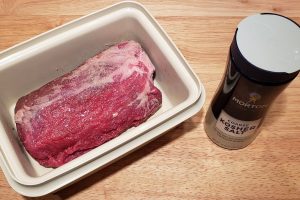
- Once you’ve cleaned the tenderloin, salt it liberally with coarse sea salt. Put the tenderloin into a plastic container large enough to hold the marinade as well. I like to use a resealable container. Let it sit while you make the marinade.
Step 2: Prepare the Marinade
- Using the Step 2 Ingredients, rough cut vegetables. Heat the olive oil in a 5 or 6 quart pan. Add the vegetables, bay leaves, cloves, and pepper corns. Cover and simmer until the vegetables are tender. Take off the heat and let cool for about 15 minutes.
- Meanwhile, prepare the liquid for the marinade by adding the bouillon to two cups of hot water. Stir to make a mushroom stock base. Add ketchup, vermouth, and tomato paste. Stir well and add to the vegetables.
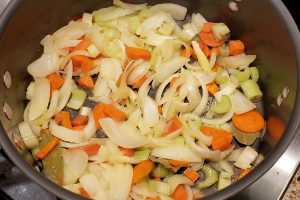
- Add the marinade to the container with the tenderloin. Make sure the marinade covers the tenderloin. Leave in the refrigerator for 24 hours. Baste regularly.
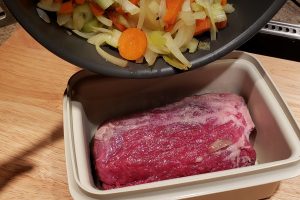
Step 3: Bake the Tenderloin to Seal
- In other recipes this step has been done on the stovetop, where the tenderloin is seared on all sides to create a seal. The problem I’ve run into is the meat in the center doesn’t get hot enough. You want it pink in the center, but not so rare that it’s not reached an internal temperature of 145℉ (that’s the lowest “safe” temperature for beef, and it will leave a delightfully pink center). So, for this recipe, we’ll use a more reliable way.
- Remove the tenderloin from the container, and clean off all the marinade. Reserve the marinade, you’ll need it for the gravy (and you WILL want this gravy!).
- Pre-heat the oven to 425℉. Place the tenderloin on a baking pan and cover with foil. Bake at 425℉ for about 30 minutes, and check the internal temperature. If it’s not at least 145℉, continue baking for 5-minute intervals, testing in between, until its reached 145℉ or higher. Let cool while you are finishing the duxelles.
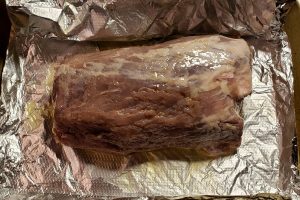
Step 4: The Duxelles
- Duxelles is a French term for finely chopped mushrooms, onions (we’ll use shallots) and herbs sautéd in butter. To make ours, use the Step 4 Ingredients. Use a food processor to chop fresh white mushrooms. Dice the shallots and fry them in a pan with the melted butter. Add the chopped mushrooms and sauté for about 10 minutes. Add the port wine, bring to a boil to reduce for 5 — 10 minutes. Take off of the heat, and add the pate. Combine well. Let cool for 15 minutes.
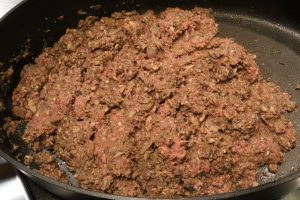
Step 5: Wrap the Tenderloin in Duxelles
- To do this, place a sheet of plastic wrap onto a smooth surface. Spread about half the duxelles onto the sheet and then put the tenderloin on top. Pull the sides and ends of the sheet up, put the rest of the duxelles onto the tenderloin and fold the plastic wrap over. Use more plastic wrap to go around the tenderloin, making a snug package.
- Refrigerate for at least 12 hours.
Step 6: Make the "Boat"
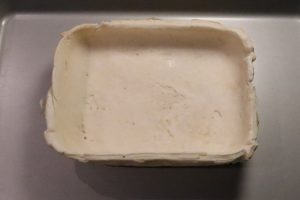
- To avoid a soggy bottom pastry, make a “boat” to hold the tenderloin. Jennifer Patterson suggested making a pastry bottom that’s made from regular pie dough. The tenderloin sits in the bottom of the boat, and we’ll drape the puff pastry over it, using egg wash “glue” to stick the puff pastry to the pie pastry bottom.
- To make the boat, we’ll need to make it from a mould. Measure the length of the tenderloin and find a loaf pan, that’s about the same size, over which you can put a roll of store-bought pie dough.
- Put the loaf pan upside down in a baking tray. Roll-out the pastry so that it will cover the loaf pan. You want the boat to be a bit thick and have sides that are a bit less than 2” tall. That will give you a sufficient side to tack the top layer of puff pastry to when we finish wrapping the tenderloin. Use a fork to poke small holes into the pastry. Refrigerate for about 30 minutes.
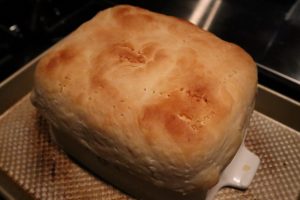
- Preheat the oven to 425℉. Bake for about 30 minutes or until golden brown. Remove from the oven and let cool to room temperature before trying to remove from the mould.
Step 7: Assemble the Beef in Pastry
- Remove the tenderloin wrapped in duxelles from the refrigerator. Carefully unwrap it, and put it into the pastry boat you made in step 6.
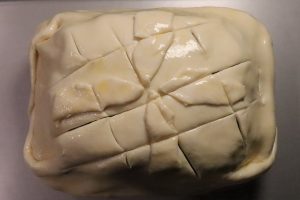
- Scramble the egg with a teaspoon of water and paint the sides of the boat, so that the puff pastry will stick.
- Now, roll-out the puff pastry so that it’s long enough to drape over the tenderloin and down the sides so that it falls over the edges of the boat. Cut scraps off of the puff pastry and use them for a nice garnish on the top (I make four arrows and point them toward one another in the center of the pastry lid).
- Cut diagonal slits into the top of the pastry (don’t cut into the meat, the slits allow steam to escape). Then, using the rest of the egg wash, paint the entire outside of the pastry. The egg wash will give the cooked pastry a delicious, golden color.
Step 8: Bake in Two Stages
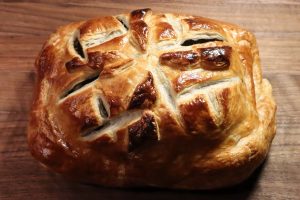
- For the first stage, preheat the over to 425℉. Put the beef in pastry into the oven and let it bake for 20 minutes.
- After 20 minutes, reduce the temperature to 375℉ and bake for another 20 to 30 minutes.
Step 9: Make the Gravy
- Put the marinade vegetables and liquid into a sauce pan. Add a cup of water, and simmer for an hour. Drain, using a sieve, to separate the liquid. You should have about two cups of liquid when done. Return the liquid to the saucepan and put the burner on low.
- Stir together the Step 9 Ingredients to combine. Slowly add the mixture to the sauce while stirring with a whisk to ensure the gravy is smooth. Increase the heat to medium and keep stirring until the gravy is thick.
Serving
- Let the beef in pastry cool for at least 30 minutes before cutting.
Serving Suggestion
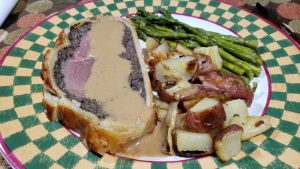
- Serve beef in pastry with sides of steamed asparagus and new potatoes baked in duck fat with thyme. Drizzle the gravy over the beef to complete.
Notes
Inspired by Jennifer Patterson (one of “Two Fat Ladies”)
